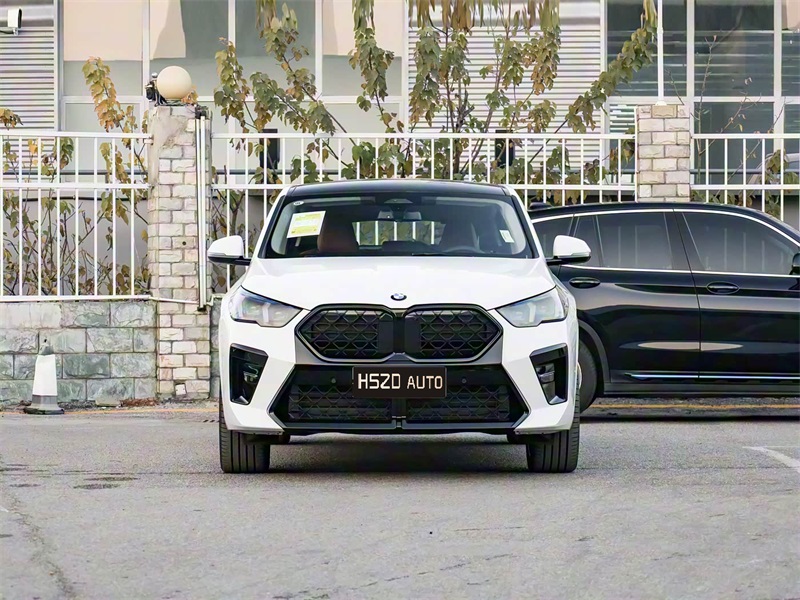
Recently, the domestic new energy SUV market has seen another wave of model updates. Models like the Li Auto L9 and Wenjie M9, all part of the “9 Series,” have launched facelifts, further enhancing their product competitiveness. Faced with this onslaught, the BMW X5, the “King of the Road” that insists on pure gasoline power, continues to maintain a surprisingly strong market presence.
Since 2026, the X5’s average monthly sales have remained stable at over 5,000 units, and in the past six months, the BMW X5 has consistently ranked among the top performers in the SUV segment above 500,000 RMB (regardless of fuel type). So, in the current surge of new energy vehicles, what makes the X5 still so popular?
It is understood that the best-selling BMW X5 is still the 2.0T xDrive30Li version, accounting for over 70% of sales. In terms of price, the base price is approximately 510,000 to 520,000 yuan, and in some regions, with trade-in subsidies, it can even be as low as 500,000 yuan. A senior sales consultant offered the following advice for purchasing the X5: “If you’re looking for value for money, the 2.0T is a more rational choice. The power is sufficient for daily use, and you can enjoy the national trade-in subsidy.”
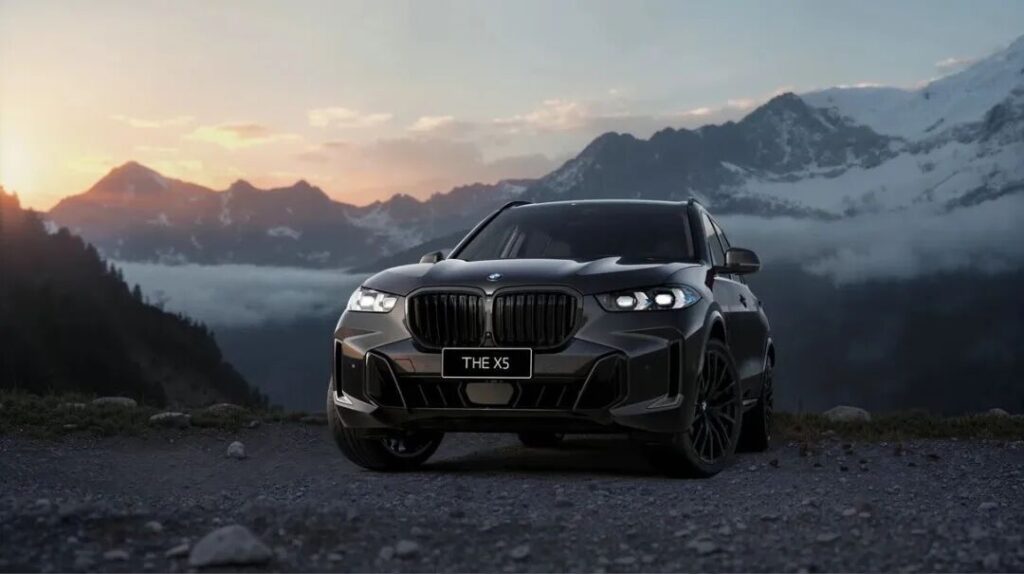
Currently, users comparing the new energy vehicle “9 Series” models are primarily drawn to their larger interior space, superior comfort, and abundant intelligent technology features. However, the BMW X5’s performance is equally impressive. With its extended wheelbase of 3105 mm, its actual rear legroom rivals any competitor in its class. More importantly, the X5’s seats feature thicker padding and ergonomic optimization, offering superior support and comfort for long journeys compared to many rivals that prioritize a “large sofa” feel.
Driver assistance has always been a key competitive feature among 9-series models, but the X5 hasn’t blindly pursued so-called “automatic” driving. Instead, it insists on a user-friendly, easy-to-use, and confident driver assistance system. Currently, all X5 models come standard with L2+ level intelligent driving assistance Pro, enabling stable lane keeping, adaptive cruise control, and automatic lane changing with eye-tracking confirmation on closed roads. When the vehicle provides a lane change prompt, the driver can smoothly complete the maneuver by checking the rearview mirror. This design retains the driver’s control while allowing technology to participate in an auxiliary role, avoiding the discomfort of being controlled by a machine.
Furthermore, the intelligent voice control is responsive, and daily adjustments to navigation, air conditioning, and multimedia are smooth and natural enough to handle everyday use. In short, the X5’s intelligent features aren’t flashy, but they are incredibly user-friendly.
It’s an undeniable fact that new energy vehicles accelerate quickly and deliver torque early. However, many users who switched back to the X5 from electric vehicles are still captivated by its smooth and fluid dynamic performance, which is precisely the source of BMW’s “King of the Road” title.
The BMW X5 offers two engine options: a 2.0T (30Li) and a 3.0T (40Li). The former outputs 258 horsepower and 400 Nm of torque, perfectly meeting daily commuting and overtaking needs; the latter is equipped with the classic B58 inline six-cylinder engine, capable of producing up to 381 horsepower and 520 Nm of torque, accelerating from 0 to 100 km/h in just 5.5 seconds. Its smooth power delivery and deep, resonant exhaust note have captivated many consumers.
In terms of chassis, the X5 comes standard with adaptive air suspension and 315mm wide rear tires. Combined with the xDrive intelligent all-wheel-drive system, it can instantly distribute torque to the wheels with traction, maintaining vehicle stability on wet, snowy, or uneven surfaces.
The DSCi electronic braking system provides extremely linear braking response, without the drag or nose-diving often found in newer models. This solid and stable driving quality reduces motion sickness for passengers and alleviates fatigue on long drives. For many families, this is the core value of a luxury mid-size SUV.
The new energy 9 Series truly demonstrates its sincerity in terms of configuration; it has virtually everything you could imagine. For traditional luxury brands, the lack of features is a long-standing criticism. However, the 2026 BMW X5 addresses this issue effectively. Even the entry-level model now comes standard with high-value features such as a full-color head-up display, ventilated front seats, heated four seats, Harman Kardon sound system, 21-inch wheels, digital keyless entry, and remote parking via smartphone.
These features, which are typically only available on mid-to-high-end models or even as optional extras in competing vehicles, are all standard on the X5. In other words, choosing the entry-level 30Li already provides a premium experience previously only available on higher-end models. This “more for the same price” strategy greatly enhances the X5’s market competitiveness. It’s also perfectly acceptable for users who prioritize features.
In conclusion:
Since the first generation X5 debuted in 1999, this car has been around for nearly 30 years. It pioneered the luxury Sports Activity Vehicle (SAV) segment, and each generation has become the undisputed benchmark in its class thanks to its solid mechanical quality and all-around performance. For many, the X5 is more than just a car; it’s a goal to strive for.
Currently, new energy vehicle brands are frequently updating their 9-series models, and the competition in intelligent and technological features is becoming increasingly fierce. However, the BMW X5 proves with its stable sales that a mature and reliable driving experience and a deep brand heritage can still win over consumers.